

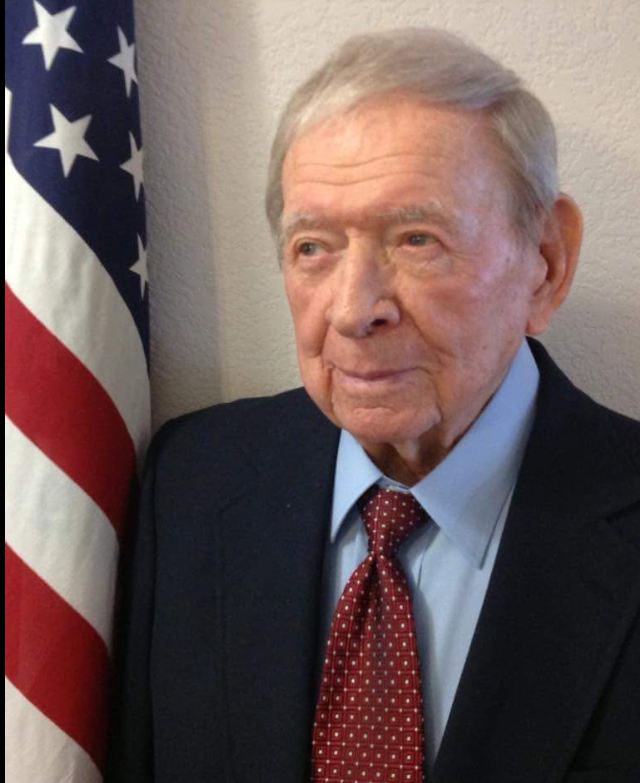
These are the facts of why we are attempting to get DeWitt’s DSC upgraded to a Medal of Honor
W e are working to upgrade Sergeant Leonard DeWitt’s awarded Distinguished Service Cross to the initially recommended Medal of Honor for actions he performed 28 July 1943 while serving with Company I, 162nd Infantry Division in the battle of Salamaua near Boise, New Guinea
1. Sgt. DeWitt was specifically recommended for Medal of Honor by the commander of the 162nd Regiment of the 41st Infantry Division, Colonel H. Haney on 9 March 1944.
The recommendation was approved by Major General H.H. Fuller, 41st Infantry Division Commander, on 14 March 1944.
Leonard DeWitt was informed of his recommendation for a Medal of Honor by Col Kenneth Sweaney, Chief of Staff, 41st Infantry Division in a memorandum dated 17 March 1944. Sergeant Leonard DeWitt’s recommendation for a Medal of Honor was downgraded to a Distinguished Service Medal on 11 August 1945 by General Douglas MacArthur with no reason for the downgrade.
2. Affidavits to support Sergeant Leonard DeWitt’s Medal of Honor were submitted and signed by Laurance Parker, Sergeant, Company I, 162d Inf., Captain Albert Colvert, Commander, Company I, 162nd Inf., and Sergeant Dale Gibson, Company I, 162nd Inf., 2LT Robert O. Hudson, I Company, 162nd Inf. Subscribed and sworn to Captain B.A. Bache on 26 Feb ’44. All affidavits are available for reference.
3. The affidavit statements describe the actions of Sgt. Leonard DeWitt. In one of its first battles, DeWitt’s company, I Company, 162nd Regiment was situated in a perimeter on a ridge top on Scout Trail, 400 yards west of Roosevelt Ridge with orders to hold it. On the night of July 28, 1943, that hill was attacked by a large Japanese force (determined later to be two battalions) from a ravine leading to the top of the hill. Sgt. DeWitt, the communications sergeant, volunteered to take extra ammunition to the soldiers facing the brunt of the attack.
4. As he approached their foxholes, the soldiers in them were departing. Sgt. DeWitt found himself facing the Japanese onslaught alone. First, Sgt. DeWitt fired his M1 Garand until it ran out of ammunition, then he fired a Browning Automatic Rifle until it ran out of ammunition. He then threw three grenades into the ravine. During this encounter, Sgt DeWitt exposed himself to grave personal danger.
After he had exhausted the weapons and ammunition available to him, the Japanese threw a grenade which caused Sgt. Dewitt to roll into the ravine where he engaged in hand to hand combat with the enemy.
He stuck one Japanese with his bayonet and hit another with his helmet. He then climbed to the top of the ravine and in frustration threw his helmet into the ravine. The attacking Japanese then departed with evidence of 20 Japanese casualties from Sgt. DeWitt’s defense of his company perimeter.
5. Sgt. DeWitt delivered ammunition to American positions, removed panicky soldiers from the front lines, and provided leadership beyond his rank and assigned duties of the day. Sgt. DeWitt held off a Japanese advance by himself and deserves the Medal of Honor that was recommended for his valor for his actions on the night of 28 July 1943.
6. The 41st Infantry Division was the first infantry division assigned to the SW Pacific Theater. It fought from 1943 to 1945 alongside the 32nd Infantry Division.
The 41st Infantry Division received no Medals of Honor during their bloody campaigns, while engaged in comparable days of combat to the 32nd Infantry Division.
It experienced high rates of killed and wounded in action.
The 32nd Infantry Division received 11 Medals of Honor during WWII.
The 41st Infantry Division which fought in the same battles and for the same amount of time received zero Medals of Honor during WWII.
The 32nd received at least 157 DSCs and 41st received 25 DSCs. Sgt. Leonard DeWitt did not desire the Medal of Honor for his actions, but wanted it as representative of the actions of his fellow 41st Infantry Division soldiers in the SW Pacific Theater.
7. There were significant concerns of Gen Douglas MacArthur’s office in the Pacific “sitting on” MOH recommendations and not forwarding same to the War Department in Washington DC in a timely fashion.
The War Department even had to send a message to Gen. MacArthur on 13 August 1945 to forward any Medal of Honor awards that were sitting on his desk.
8. The “in theater” recommendation of a Medal of Honor that had the approval of every officer in Sgt. DeWitt’s chain of command was downgraded to a Distinguished Service Cross by MacArthur’s office on 8 September 1945.
9. Sgt. Leonard DeWitt gave personal testimony of his actions the night of 28 July 1943 at his home in 2011 to LTC Alisha Hamel and LTC Warren Aney, Oregon National Guard.
